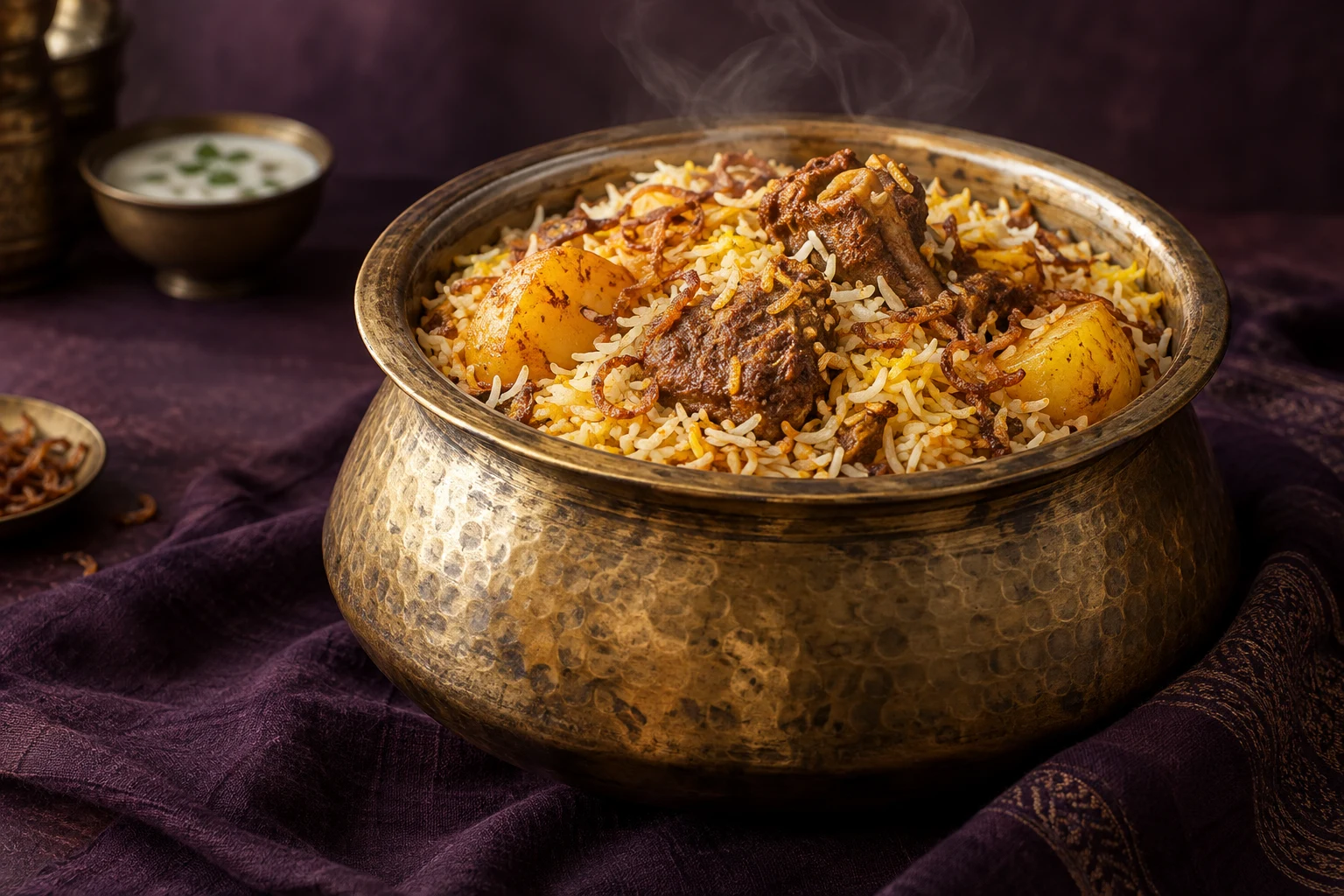

Every kacchi cook knows the itch. The pot has been on the heat for a while, the kitchen smells wonderful, and one quick look could not possibly hurt. It can. Dum only works while the pot stays shut.
What dum actually is
Dum means cooking in a sealed vessel over low heat, so that food cooks in its own steam. In a kacchi, moisture from the marinade and the meat turns to vapour, rises through the rice, condenses under the lid and falls back again. That small cycle, repeated over and over, is what cooks the meat, finishes the rice and carries flavour from the bottom of the pot to the top.
The seal
Traditionally the lid is sealed to the pot with a rope of plain flour dough, which bakes hard and locks the steam in. At home, a tight lid over a layer of foil, or a clean cloth tucked safely away from the flame, does a similar job. Whatever you use, the goal is the same: steam should have nowhere to go.
The heat
Gentle and even. A heavy-bottomed pot spreads heat and protects the bottom layer from catching. Many cooks place a flat pan between the flame and the pot, and large wedding pots are often finished with hot coals on the lid so heat arrives from above as well as below. An oven set low is a very forgiving modern stand-in.
The rest
When the cooking time is up, leave the pot closed for a little longer. The steam settles, the grains firm up, and the layers hold together when you serve. Then break the seal at the table if you can, because the first rush of aroma is part of the meal.
Lift from the side, in deep spoonfuls, so every plate gets rice from the top and meat from the bottom.
Follow the heat level and cooking time given in your recipe, and check that the meat is cooked through before it goes to the table. Do you seal with dough, foil or something your grandmother swore by? Share it in the comments.
Leave a Reply