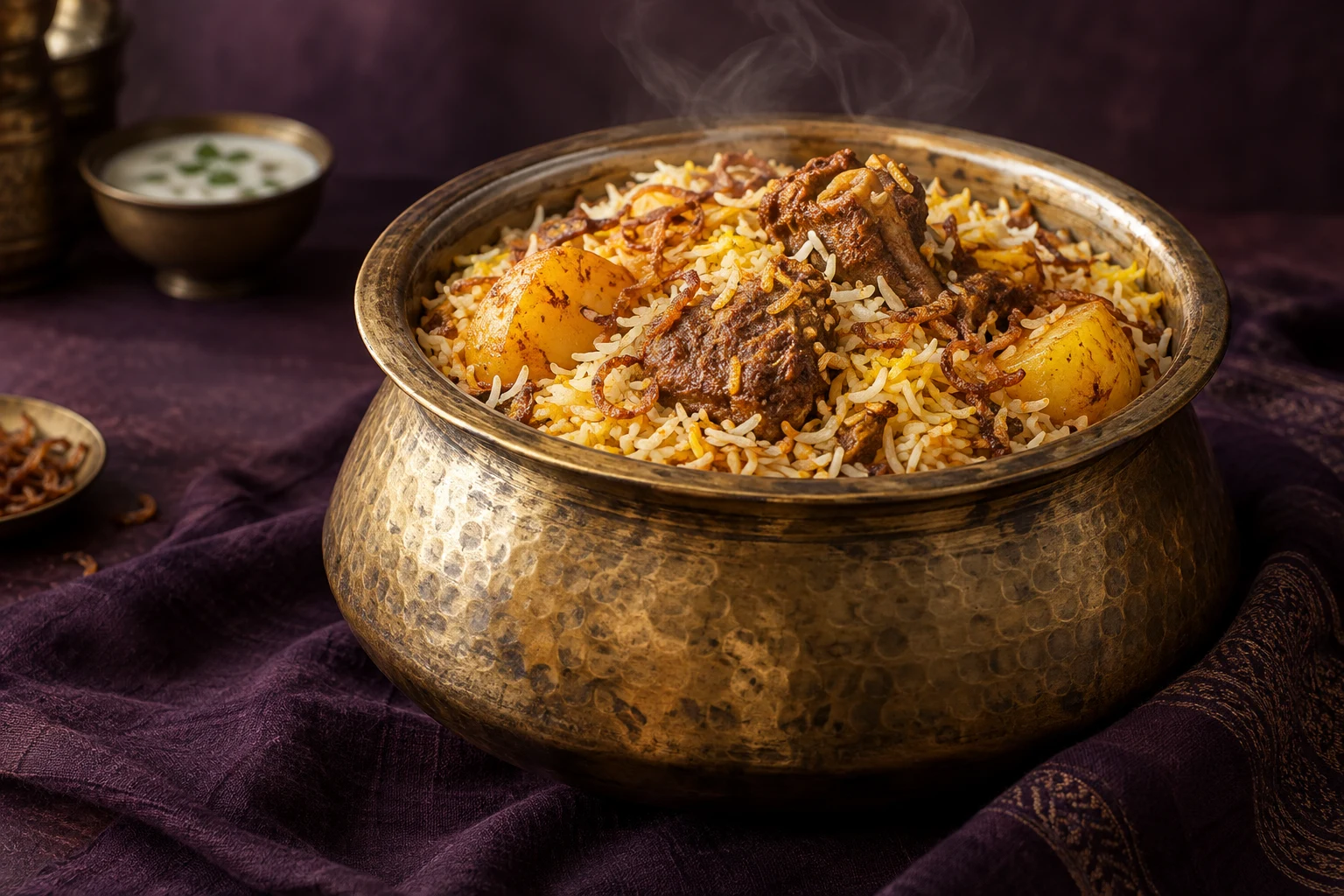

Ask what separates kacchi from every other biryani and the answer is hiding in the name. Kacchi means raw. The meat goes into the pot uncooked, under a blanket of partially cooked rice, and the two finish together in a sealed vessel. Nothing is cooked separately and combined at the end. The pot does the combining.
Kacchi and pakki
Most biryanis belong to one of two families. In a pakki biryani, the meat is cooked into a gravy first, then layered with rice and steamed briefly to bring everything together. In a kacchi biryani, the marinated meat starts raw. It sounds like a small difference. At the stove, it changes everything.
Because the meat and the rice must reach the finish line at the same moment, a kacchi cook thinks in terms of timing and trust. The marinade has to tenderise and season the meat. The rice has to be taken off the boil early enough to survive a long steam. The seal has to hold. There is no tasting and adjusting halfway through.
What the method gives back
- Rice that tastes of the meat. As the meat cooks, its juices rise as steam through the grains above it.
- Layers you can see. White, saffron-gold and deep brown grains sit side by side instead of blending into one colour.
- A sense of occasion. Opening a sealed pot at the table is a small ceremony of its own.
A dish with many homes
Kacchi is cooked across South Asia, and every kitchen has opinions. In Dhaka it is the dish of weddings and big family days, usually made with mutton, and very often with whole potatoes tucked among the layers. Hyderabad has its own celebrated kacchi tradition with a different balance of spice and herbs. Neither is the “real” one. Both are answers to the same question: what happens when you trust raw meat, good rice and a tight lid?
You do not cook a kacchi so much as set it up well and then get out of its way.
If you are cooking one at home, work from a complete, tested recipe for quantities and timings, and always check that the meat is fully cooked before serving. This journal is here for everything around the recipe: the why, the ingredients, and the stories.
How is kacchi made in your family? Tell us in the comments below.
Leave a Reply